



01
Recurring Upgrades
Repeated version upgrades and infrastructure replacements can shift budget and resources from EDI operations to maintaining the system itself.
Upgrade Burden
Global trading partners, SAP/ERP, APIs, and high-volume transactions.
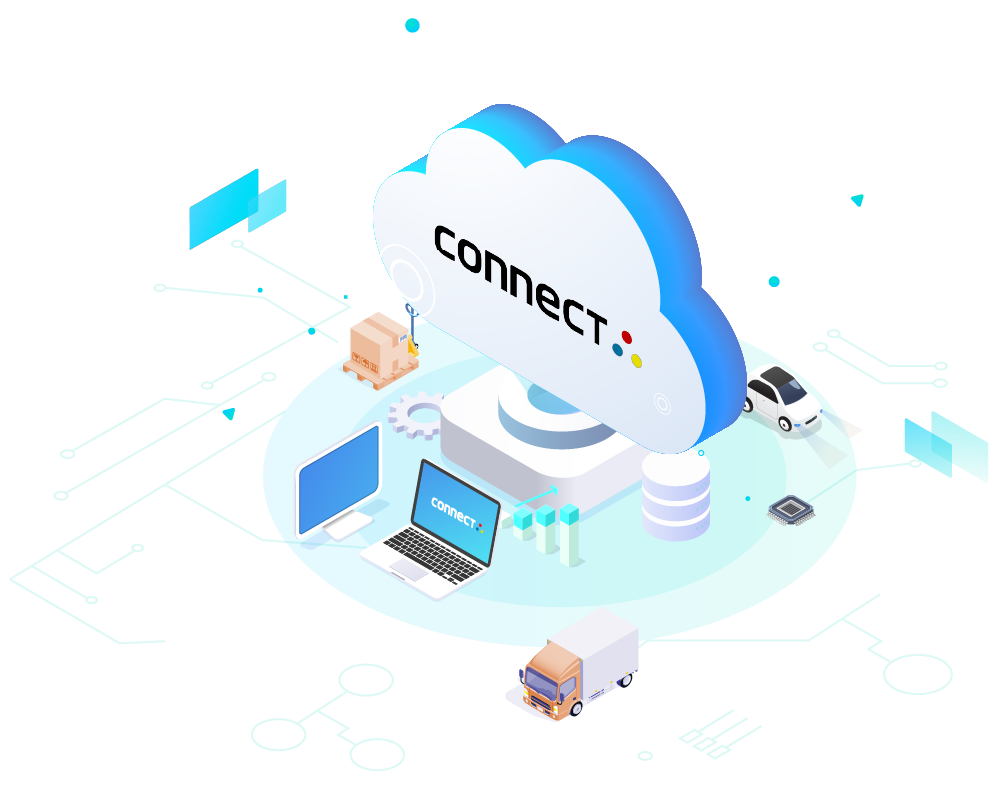
Connect Service brings complex B2B transaction data into one cloud platform
for integration, monitoring, and operations.
As trading partners and data volumes grow and SAP/ERP environments become more sophisticated, EDI must do more than exchange documents.
Infrastructure, interfaces, security, monitoring, operations, and API expansion need to be designed as one integrated environment.
Repeated version upgrades and infrastructure replacements can shift budget and resources from EDI operations to maintaining the system itself.
Upgrade BurdenAs partners and transaction volumes grow, architectures that require repeated server expansion and performance redesign become a barrier to scale.
ScalabilityFor mission-critical EDI, strong operations matter not only for incident response but also for onboarding partners, changing maps, and adapting to business changes.
OperationModern integration requires a unified approach that covers traditional EDI as well as REST APIs, Web Services, ERP, WMS, and legacy systems.
EDI + APIConnect Service goes beyond cloud infrastructure. It combines long-standing EDI and SAP implementation expertise with industry-specific integration experience in its operating model.
EDI consulting and implementation expertise
Share of workforce in EDI/SAP consulting and R&D
Share of Korea's SAP EAI market, based on the standard proposal
First Cloud EDI SaaS launched in Korea
※ Figures and certification information are based on the Connect Service standard proposal as of September 2026.
Connect Service links partner EDI systems to SAP, ERP, legacy systems, files, and REST APIs through agents or APIs. It supports not only data exchange, but also mapping, monitoring, security, and operations.
Connect Service is designed around recurring operational requirements, not just document exchange. Evaluate high-volume processing, SAP/ERP integration, global standards, APIs, security, and operational support together.
A cloud-based scale-out architecture flexibly expands with transaction growth to support large-scale workloads.
High-Volume TransactionsConnect EDI data with internal enterprise systems, including SAP, and integrate real business processes such as orders, shipping, and settlement.
SAP / ERP / LegacyMonitor EDI processing through dashboards and support stable operations with incident and error detection and alerts.
Monitoring & SupportSupport major global document standards such as ANSI X12, EDIFACT, and VDA, along with communication protocols including AS2, OFTP2, and SFTP.
Global StandardsExtend beyond traditional EDI to modern integration methods such as REST APIs and Web Services based on your enterprise environment.
EDI + API IntegrationOperations matter even more after go-live. EDI specialists continuously support partner onboarding, change requests, and operational issues.
Enterprise Managed ServiceHigh-volume EDI must account for tomorrow's growth, not just today's throughput. Connect Service uses a cloud-native scaling architecture to respond flexibly as transaction volumes increase.
Infrastructure can scale with throughput, reducing the need to rebuild the entire system as the business and trading partner network grow.
※ Actual capacity and architecture are designed according to the customer's data size, document types, number of interfaces, SLA, and operating environment.
When moving from traditional on-premises EDI to cloud EDI, total cost of ownership should be evaluated across infrastructure, upgrades, operational staffing, scalability, and internal system integration—not just license fees.
| Comparison | Traditional On-Premises EDI | Connect Service |
|---|---|---|
| Infrastructure | Requires significant server/software deployment and customer-managed infrastructure | Cloud-based service model reduces the burden of dedicated EDI infrastructure |
| Scaling | Additional infrastructure and capacity planning required as volume grows | Scalable architecture designed for transaction growth |
| Upgrades | Recurring upgrade burden as versions and infrastructure change | Technology changes and infrastructure operations are handled within the service model |
| SAP·ERP Integration | May require a separate integration project or specialist partner | Integrated support for internal system connectivity based on SAP, EAI, and EDI expertise |
| Global EDI | Support scope and additional modules vary by product | Supports major standards including X12, EDIFACT, and VDA, plus AS2, OFTP2, SFTP, and more |
| API Expansion | May require a separate API platform or additional configuration depending on product/version | Extend EDI, REST API, and Web Service integration within one service |
| Operational Support | Support may be fragmented depending on vendor and partner contract structures | Implementation, development, and operations supported by Korea-based EDI specialists |
※ Features, costs, and operating scope of traditional EDI solutions vary by product, version, and contract. This table is intended to highlight considerations when choosing an operating model, not to rank specific products.
Connect Service supports reliable EDI operations through data encryption, account and permission management, audit logs, data backup and recovery, and monitoring.
Apply encrypted data exchange and secure communication such as TLS.
Control access through secondary authentication and account-level permission management.
Record access and operational history to support traceability and audit response.
Provide data backup and recovery capabilities to improve operational resilience.
Monitor EDI processing status and identify incidents and errors through the dashboard.
Specialist consultants support diverse EDI environments from implementation through operations.
EDI migration is more than replacing a product. It is a controlled transition of infrastructure, development, and operations while preserving existing trading partners and interfaces.
A global logistics company that had used its previous EDI solution for more than 10 years adopted Connect Service to address maintenance challenges and next-generation architecture requirements.
※ Based on a publicly disclosed customer case. Certain operational details and project scope may remain confidential due to customer security and contract policies.
From retail and logistics to semiconductors and global automotive supply chains, Connect Service has connected diverse standards, protocols, and ERP environments to real business workflows.

The company replaced a manual process of downloading orders from retailer portals, editing CSV files, and uploading them to ERP with an EDI-based workflow. Retailer-specific EDI messages are automatically transformed into standardized data and integrated with ERP, improving order-processing efficiency and accuracy.

A manual process of checking orders across six major retailer portals was replaced with EDI, automatically connecting order data to the ERP system. This reduced order-confirmation delays and manual entry errors while improving productivity and on-time delivery.
 KROGER
An AS2-based EDI environment was implemented to meet new-vendor onboarding requirements for North American retailers, connecting retailers and a logistics provider to automate order and logistics processes.


OFTP-based EDI was implemented to meet each global automotive OEM's data-format and communication requirements, automating supply-chain workflows from invoice receipt through ERP integration.
Manual CSV uploads were replaced with AS2-based EDI to automate key documents including ORDERS, ORDCHG, ORDRSP, DESADV, and INVOIC, connecting order, shipping, and settlement processes.
What sets Connect Service apart is not only the platform, but also the specialists who have built and operated EDI environments in the field.
5+ EDI consultants with 20 years of experience,
and 15+ specialists with over 10 years of experience support EDI implementation and operations across industries.
Connect Service uses implementation experience across automotive, semiconductor, retail, and logistics to design integrations quickly around each industry's trading structure and standards.
Supports automotive-specific standards such as VDA, ODETTE, and OFTP2, along with connectivity for global OEMs and suppliers.
Collects and standardizes retailer order data and connects it automatically to ERP to improve order-processing accuracy and operational efficiency.
Automates order and shipping data integration with global manufacturers to reduce manual errors and processing delays.
Integrates infrastructure, development, and operations for logistics environments that require many global trading partners, high document volumes, and continuous operation.
The implementation-impact examples in the standard proposal show improvements in processing time, error rates, operating costs, customer satisfaction, and data accuracy through automation of manual processes.
Connect Service brings experience across retail, automotive, logistics, electronics/semiconductor, and VAN environments. That implementation experience can be reused when onboarding new trading partners.
CASE CUSTOMER CONNECTED PARTNERCONNECTED PARTNER
 CONNECTED PARTNER
 CONNECTED PARTNER
 CONNECTED PARTNERCONNECTED PARTNERCONNECTED PARTNERCONNECTED PARTNER
 CONNECTED PARTNER
 CONNECTED PARTNER
※ Logos are shown to identify customers or actual EDI integration partners and do not imply a direct contractual relationship between every listed brand and Connect Service.
When replacing a third-party EDI product or an existing on-premises system, the migration process matters as much as functionality. We analyze current interfaces and trading partners and validate the transition step by step.
Review current operational issues, improvement goals, and key trading partners.
Define document, interface, process scope, and development requirements.
Develop mappings for standard and non-standard documents and internal system interfaces.
Validate protocols, document exchange, and business workflows with trading partners.
Validate data integrity and exception cases using actual business data.
Agree on migration schedule, parallel operations, and cutover criteria.
Stabilize operations after cutover through monitoring and technical support.
Yes. A migration project begins by analyzing existing trading partners, EDI documents, communication protocols, internal SAP/ERP interfaces, and transaction volumes. We then design the mapping and integration architecture for the new EDI environment. Because product environments and customization levels vary, the actual migration scope is confirmed through a preliminary assessment.
Yes. Connect Service supports industries with large-scale B2B transactions, including automotive, retail, semiconductor, logistics, and manufacturing, with a cloud-scalable architecture designed to respond flexibly to growth. Actual capacity is designed and validated based on document size, interface count, concurrent throughput, and SLA requirements.
For customers with high-volume requirements, infrastructure and parallel-processing architecture are designed around expected average and peak throughput and data size. Connect Service uses a cloud-based scaling model to handle traffic growth, with performance validation based on the customer's workload during the project.
Yes. EDI data can be mapped to RFC or IDoc formats and posted directly to SAP ERP or S/4HANA. Architectures using SAP products such as SAP Process Orchestration or third-party connectors can also be designed to match the customer's environment. Integration with ERP, WMS, SCM, legacy databases, and APIs can be included depending on project scope.
Connect Service provides dashboards for EDI processing status along with incident/error detection and alerting. Operational scope and response procedures are agreed based on the customer's environment and service configuration.
Connect Service supports major global EDI document standards such as ANSI X12, EDIFACT, and VDA, along with communication protocols including AS2, OFTP2, SFTP, and HTTPS. Document transformation, mapping, and communication architecture are designed around each trading partner's requirements.
Yes. Connect Service supports API-based integration such as REST APIs and Web Services in addition to traditional EDI, allowing connectivity to evolve gradually as trading partner or internal system requirements change.
Rather than comparing license prices alone, total cost of ownership should include servers, software, upgrades, specialist operations, maintenance, and development for new trading partners. Connect Service uses a SaaS model to reduce infrastructure and operational burden, while actual savings depend on the current EDI environment and usage.
Tell us about your current EDI solution, trading partners, documents, protocols, expected transaction volumes, and SAP/ERP environment.
We'll help review a Connect Service implementation and operating model that preserves as much of your existing environment as possible during migration.

